






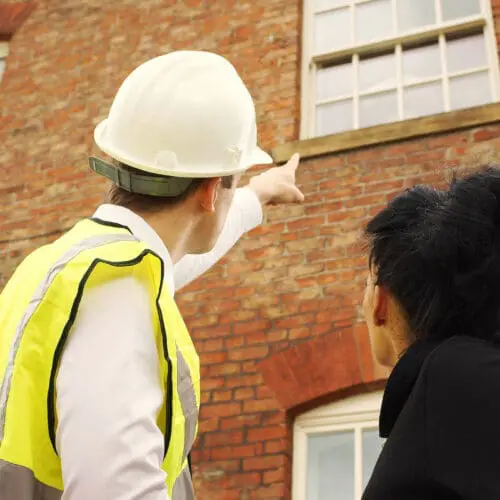
Key Challenges for remediation contractors delivering fire safety remediation works
November 2026Developers, landlords and funders are heavily investing in programmes to remediate fire safety defects in existing buildings. These projects present a unique set of commercial, technical and legal challenges. For remediation contractors, success depends not only on delivering the physical works but also on managing responsibility for historic defects, programme uncertainty, risk allocation and regulatory compliance.
Commercial context and risk allocation
A key challenge on fire safety remediation projects is the commercial background against which such projects are procured. Unlike a typical new-build project, remediation works are often undertaken to address historic defects and, in some cases, the contractor carrying out the works may have been involved in the original design or construction of the building. The works may be undertaken to mitigate potential liability arising from those historic defects or the contractor may be an entirely new party engaged to rectify defects for which it bears no responsibility.
In that context, standard risk allocation typically found in new-build construction contracts may be inappropriate and disproportionate. Whilst clients, landlords and funders often seek extensive contractual protections, contractors will seek to ensure that they do not assume liability beyond the agreed remediation scope or take responsibility for defects outside their control. The contractual arrangements should therefore reflect the particular commercial circumstances of the remediation project, rather than simply adopting a standard new-build position.
For this reason, discussions regarding liability, insurance, design responsibility and compliance obligations should take place at an early stage. Establishing realistic expectations from the outset can help avoid disputes and ensure risk is allocated appropriately.
Responsibility for existing defects
A key challenge is determining where responsibility begins and ends.
Unlike a new-build project, remediation contractors are working on buildings that already contain defects. In many cases, not all defects will have been identified at the outset of the works.
A key risk is that contractors could end up assuming responsibility for pre-existing defects that they did not cause and could not reasonably have discovered during the tender process. It is therefore important that the remediation contract differentiates between: (i) existing defects for which the contractor is not responsible; (ii) defects identified within the agreed remediation scope; and (iii) any newly discovered “defects” uncovered during the works.
The remediation contract should entitle the contractor to additional time and payment where previously unidentified defects are discovered and are not attributable to the contractor.
Inspections
Rights to open up and inspect the works could be used to identify additional defects and seek further remedial works from the contractor.
The remediation contract should clearly identify what investigations have been undertaken, the assumptions upon which the contractor’s price is based and the process for dealing with newly discovered defects.
Changing standards
Remediation contractors are often required to navigate changes in law, guidance and industry standards, as well as changing expectations from regulators, building control bodies, owners and occupiers.
A remediation strategy that was considered acceptable at tender stage may require amendment due to changes in law, updated guidance or evolving practice. This can result in additional cost and delay due to additional design work that was not anticipated at the outset.
Contractors should ensure that the remediation contract clearly allocates responsibility for such changes occurring after award of the contract. Appropriate provisions should entitle the contractor to additional time and payment where such changes affect the scope or delivery of the remediation works.
Occupied buildings
Unlike traditional construction projects, remediation works are often carried out in occupied residential buildings. Working around residents presents challenges including access restrictions, communication requirements, restricted working hours and phased working.
Contractors should ensure these constraints are properly reflected in their programme and that they are entitled to time and money where delays arise from matters that could not reasonably have been anticipated at tender stage or caused by third parties. Failure to do so may leave the contractor exposed to liquidated damages or delay claims.
Sign-off
Building owners, funders and regulators require comprehensive records demonstrating that remediation works have been properly designed, installed, inspected and certified. The associated compliance and record-keeping obligations can be substantial and should be reflected in the contractor’s price and programme.
The fire engineer will often play a leading role in the development, review and certification of the remediation strategy and should remain closely involved throughout the project.
Final thoughts
Remediation projects create risks that are rarely encountered on traditional construction projects. One of the principal challenges is the need to deliver a compliant remediation solution whilst navigating uncertain defect scopes, evolving regulatory expectations and a complex allocation of historic responsibility.
Whether the contractor is addressing its own historic works or defects arising from the work of others, clear scope definition, realistic programme allowances and a proportionate allocation of risk are essential. Above all, managing client expectations from the outset is key.
The most successful remediation contractors are those who understand that risk management begins long before work starts on site. Careful planning and proportionate risk allocation can significantly reduce the likelihood of disputes and help ensure that complex remediation projects remain commercially viable.
If you have any questions regarding the information discussed in this article, please contact Andrew Croft and Alexander Homatas.
Download PDF